How to make faceless YouTube videos with AI and original narration
Write an original faceless YouTube video, pair each narrated claim with visual evidence and review AI illustrations before upload.
Choose a question you can answer on screen
A faceless YouTube video uses narration, demonstrations, graphics or footage in place of an on-camera host. Start with a question specific enough to investigate. “Why does a desk lamp look harsher on a video call?” gives you a result to show. Record two clips with the same camera settings, first with the lamp near the camera and then off to one side. Use those clips to explain where the shadows fall and what changes in the viewer’s image.
Write the narration from what you observed. Begin with the visible difference, explain the cause, then show a setup the viewer can try. Record your own voice or use a narrator you have permission to use. Mark technical terms and product names in the script so you can review the pronunciation before editing.
Pair the narration with evidence and illustration
- Open on a comparison. Show the two frames side by side while the narrator says, “Same camera, same exposure, different lamp position.” Use the original recordings for this comparison.
- Explain the effect. Add a simple overhead diagram showing the camera, lamp and desk. Animate an arrow as the light moves. Label a realistic generated example if viewers could take it for real footage.
- Show the steps. Cut to a short recording of the lamp moving and leave the new angle on screen long enough to see the result.
- Finish with a check. Ask viewers to compare the shadows under their own eyes and chin in a preview before joining their next call.
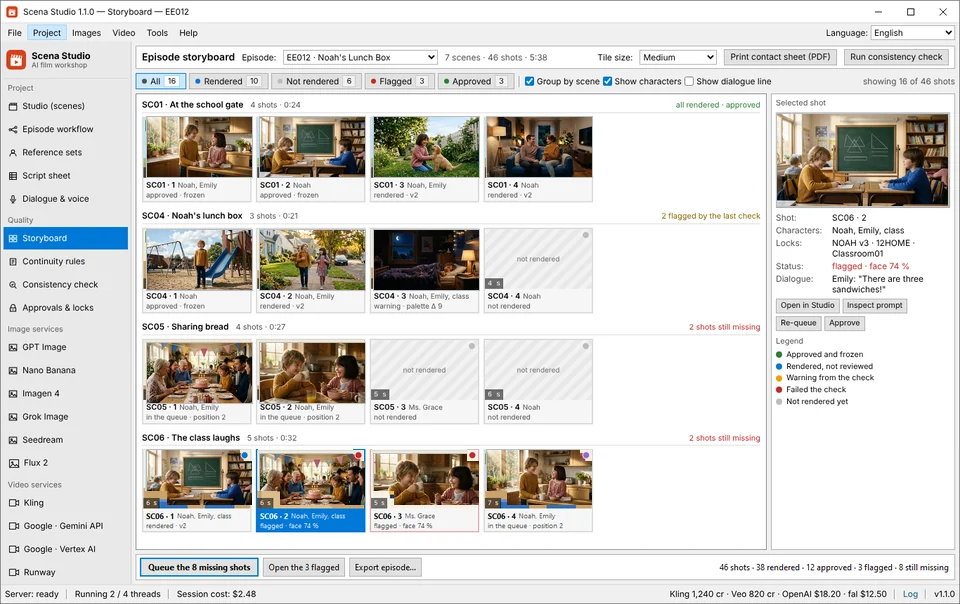
Give each visual a shot ID and a source, such as your recording, a licensed asset or a generated illustration. Queue only the illustrations that have a defined purpose. Organize generated shots in the Scena Studio queue.
Review the upload as an editor
Check every narrated claim against its supporting image or source, keep licenses with the project, and listen to the full video to catch timing and caption errors. YouTube’s monetization rules cover mass-produced or repetitive content as well as reused material. Review its separate disclosure rules if the video contains realistic AI-generated or meaningfully AI-altered material. YouTube monetization policies · YouTube AI disclosure guidance.